Every air purifier listing leads with a CADR number, and the shopping instinct is to treat it like a single score where higher always means better — buy the biggest number your budget allows. CADR is a real, independently defined measurement, not marketing fluff, but it answers a narrower question than most shoppers assume, and reading past the headline number changes which purifier is actually the right size for your room.
What CADR actually measures
CADR stands for Clean Air Delivery Rate, a standard developed by the Association of Home Appliance Manufacturers (AHAM) that measures how quickly a purifier reduces the concentration of a specific pollutant in a specific test chamber size, expressed in cubic feet per minute. It's a real, standardized test, not a self-reported marketing number — that's the good news. The narrower part is that CADR is measured separately for three different pollutant types, and a purifier's marketing usually leads with whichever number is highest.
Three numbers, not one
A CADR-rated purifier has separate scores for smoke, dust, and pollen, because different filter technologies handle particle sizes differently. A unit optimized for smoke (fine particles) doesn't necessarily perform as well on dust (larger particles) or vice versa. If your priority is wildfire smoke or cooking odors, check the smoke-specific CADR, not just the highest of the three numbers on the box — they can differ meaningfully on the same unit.
CADR determines room size, not just "how good"
AHAM's own guidance ties a specific CADR number to a maximum recommended room size, generally following a two-thirds rule: the purifier's CADR should be at least two-thirds of your room's square footage for effective air changes per hour. A purifier with a high CADR in a small room is genuinely more effective (more air changes per hour) than the same purifier struggling to keep up in a room too large for its rating. Measure your actual room before comparing CADR numbers across products — the "best" purifier for a small bedroom and a large open living room are often different units, not the same one at different price points.
CADR doesn't measure VOCs or gases
CADR testing covers particulates (smoke, dust, pollen) — it says nothing about a unit's ability to reduce volatile organic compounds, odors, or gases, which require activated carbon filtration specifically. A high-CADR HEPA purifier without a substantial carbon filter stage will do little for persistent cooking or pet odors even with an excellent particulate CADR score. If odor or VOC reduction is your actual goal, check for carbon filter media and its stated capacity separately from the CADR number.
What to actually check before buying
- Your room's actual square footage, measured, not estimated — then apply AHAM's roughly two-thirds CADR-to-room-size guidance.
- Whether the CADR number quoted in marketing is the smoke, dust, or pollen score — and whether that matches your actual concern.
- Whether the unit includes a substantial activated carbon stage if odor or VOC reduction matters to you, since CADR doesn't cover that.
- Filter replacement cost and interval — a lower upfront price with expensive, frequent filter replacements can cost more over a year of use.
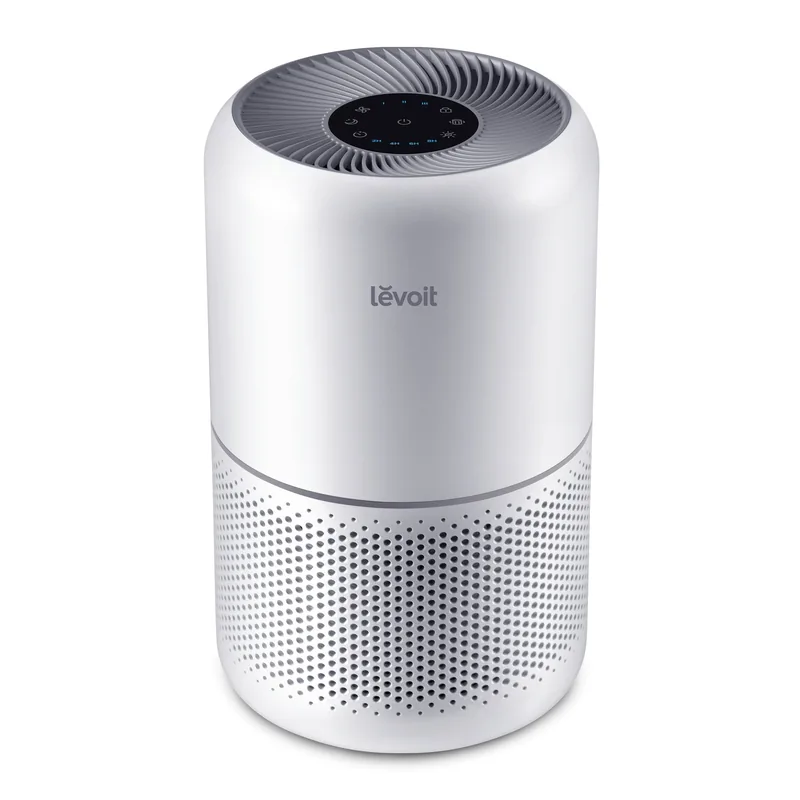
The Levoit Core 300 is one example of a compact HEPA purifier sized for a bedroom or small-to-medium room — its CADR ratings are published by AHAM rather than self-reported, which is the same standard-vs-marketing distinction covered above. The room-size math and filter-cost questions in this guide apply the same way regardless of which purifier you're actually comparing it against.
The takeaway
CADR is a genuine, standardized measurement worth paying attention to — it's not an inflated marketing number. But it's three separate scores tied to a specific room-size recommendation, not one universal "better" number, and it doesn't cover odors or gases at all. Matching CADR to your actual room size and pollutant concern matters more than chasing the single highest number on the box.