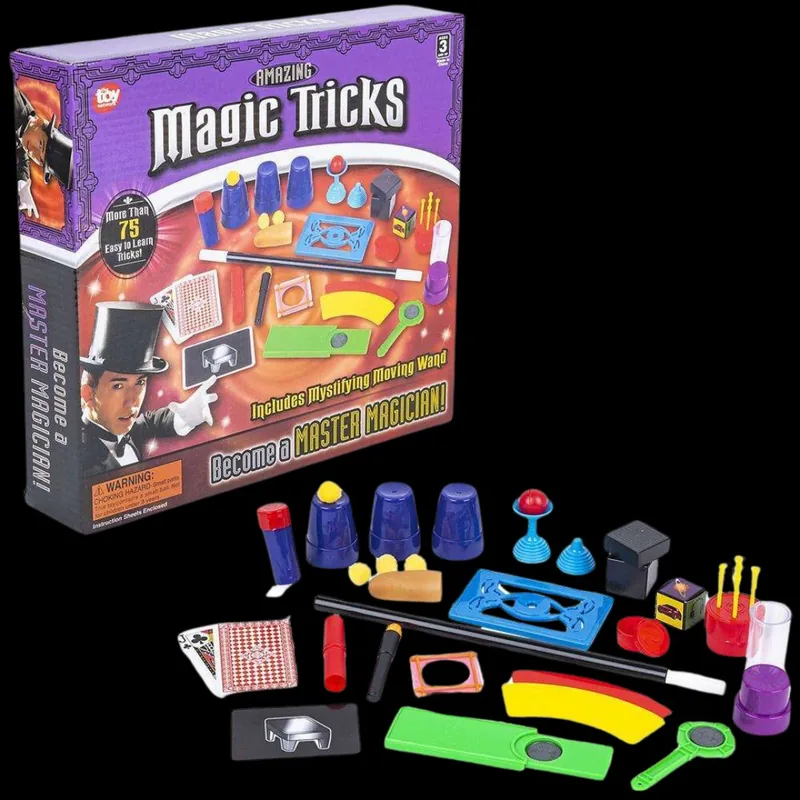
Two magic trick listings can show nearly identical reveal footage and sell for a similar price, but be completely different products underneath. The split that actually matters isn't the trick's theme (cards, coins, mentalism) — it's whether the trick works because of a hidden mechanism, or because of practiced hand skill. Buying the wrong one for how much practice time you actually have is the single most common reason a magic kit ends up in a drawer unused.
What "gimmicked" actually means
A gimmicked trick has a prop that does the mechanical work — a deck with a subtle cut, a coin with a hidden hinge, a box with a false compartment. The performer's job is presentation and misdirection, not manual dexterity, which means a gimmicked trick can genuinely be performance-ready the same day it arrives. This is the right category for a first trick, a kid's introduction to magic, or anyone who wants a reliable effect without a practice commitment.
What "sleight of hand" actually means
Sleight-of-hand tricks use no hidden mechanism at all — a card control, a coin palm, a false shuffle — which means the trick's success depends entirely on hours of practiced technique before it looks clean to an audience. The upside is that a well-practiced sleight-of-hand trick can be performed with borrowed, ordinary objects (someone else's deck, someone else's coin), which is a real and valuable difference from a gimmicked trick that only works with its specific prop. The trade-off is real: expect weeks, not days, before a new sleight-of-hand move looks smooth enough to fool anyone.
Reading the listing before you buy
Listing language is a genuinely reliable signal once you know what to look for. "Easy to learn," "no skill required," and "works instantly" almost always describe a gimmicked trick. "Practice required," any mention of a specific named sleight, or a demo video that shows real hand technique rather than just the finished reveal almost always means sleight-of-hand. A short demo video that cuts straight from setup to reveal — no visible technique in between — is itself a clue that a gimmick is doing the work, whether or not the listing says so directly.
Kids' kits vs. adult kits
Kids' magic kits skew almost entirely gimmicked, for good reason — young hands don't have the fine motor control sleight-of-hand demands, and a kit that requires weeks of practice before it's satisfying will just get abandoned. Adult kits marketed as "advanced" or "professional" skew the other way, assuming a level of hand dexterity and patience a beginner may not have yet. If you're buying for someone with genuinely no magic background, start gimmicked regardless of their age — sleight-of-hand is a worthwhile second step once the basic showmanship and misdirection habits are already comfortable.
How to actually practice a new trick before performing it
Whichever type you buy, the same rule applies before showing it to a real audience: rehearse in front of a mirror or record yourself on your phone first. This catches the two most common failure modes — a hand movement that reads as suspicious in real time even though it feels smooth to you, and patter (the talking that covers the mechanics) that isn't actually covering the moment it needs to. A trick that looks perfect the first time you try it on a live audience is rare; a private trial run first is what actually prevents an awkward first performance.
What to actually check before buying
- Whether the listing language points to gimmicked ("easy," "no skill required") or sleight-of-hand ("practice required," a named technique).
- Whether the demo video shows real technique or just a reveal — a reveal-only video usually means a gimmick is doing the work.
- Age and dexterity of the person you're buying for — default to gimmicked for a first trick regardless of age.
- Whether you're realistically willing to put in practice time before the trick needs to be performance-ready.
The magic trick collection at Abracadabra NYC spans both gimmicked sets for beginners and sleight-of-hand-focused kits — the listing-language check above applies the same way regardless of which specific trick you're comparing. See the full Gifts & Novelty buying guide for costume, mask, and wig guidance covering the rest of this category. Before you order, read our Abracadabra NYC review — sales are final, so check sizing and shipping times first.
The takeaway
A magic trick's real cost isn't the price tag — it's the practice time it demands before it actually works. Matching that demand to how much time you're genuinely willing to put in, not just picking based on theme or reveal footage, is what decides whether a trick gets performed at all.