Both a white noise machine and a weighted blanket get marketed as "the thing that finally fixes your sleep," which makes them look interchangeable if you're scrolling a shopping list at midnight. They're not. One addresses an acoustic problem — sounds interrupting or preventing sleep — and the other addresses a restlessness or tension problem through physical pressure. Picking between them comes down to which problem you actually have, not which one has better reviews.
What a white noise machine actually does
A white noise machine masks variable, unpredictable sound — a partner's breathing, street noise, a building's HVAC cycling on and off, a baby monitor's static — by replacing it with steady, uniform sound your brain stops flagging as something to notice. It solves a hearing problem, not a comfort problem. If your specific complaint is "I wake up every time a car door slams outside" or "the apartment is too quiet and every creak snaps me awake," this is the more direct fix.
What a weighted blanket actually does
A weighted blanket works through deep pressure stimulation — even, distributed weight across the body that some people find reduces the physical restlessness and low-grade anxiety that keeps them tossing and turning even in a silent room. It doesn't touch a noise problem at all. If your complaint is closer to "the room is quiet enough, I just can't get my body to settle down," a blanket addresses that directly and a sound machine won't.
If noise is the actual complaint
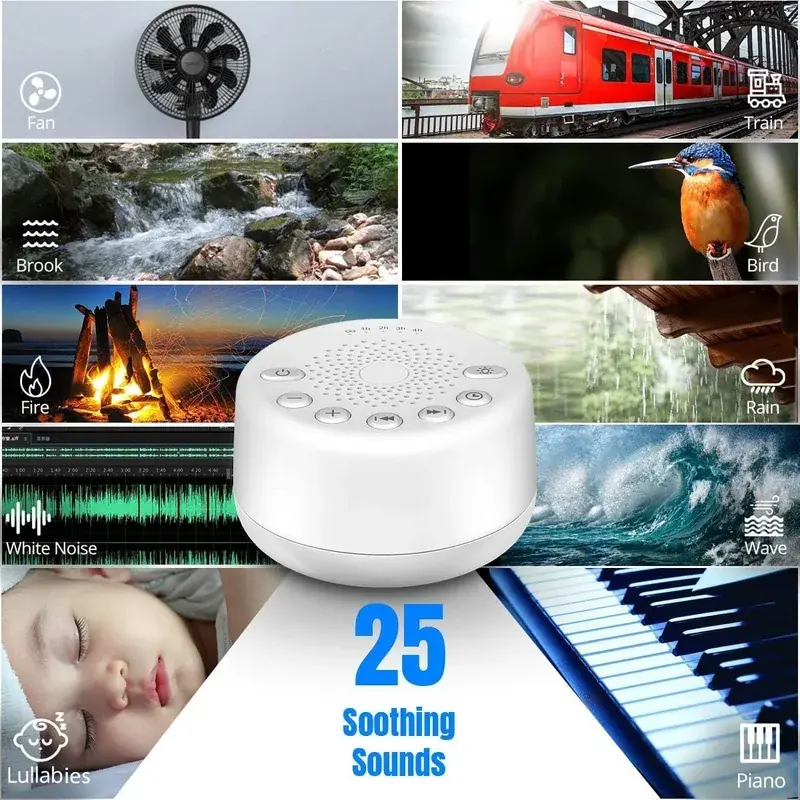
The EasySleep white noise machine is a reasonable entry point at this end: a 25-tone sound library with 32 volume levels, a night light that remembers its last brightness setting so it doesn't reset to full brightness at 3am, and the flexibility to run on AC power or USB. It's a $25 purchase carrying a 4.6/5 average across 17,521 Amazon ratings — a low-risk way to test whether masking sound actually changes how you sleep before spending more on the problem.
If restlessness is the actual complaint
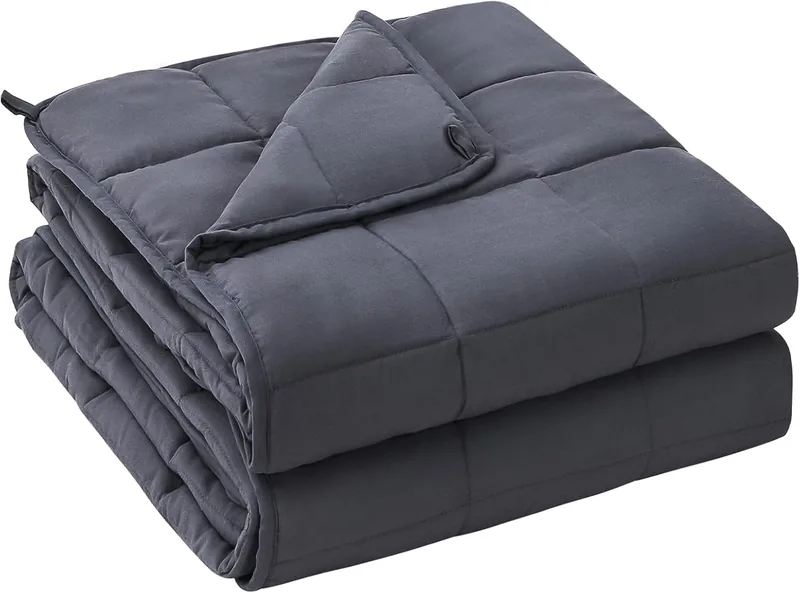
The Yescool weighted blanket sits at the other end: glass bead fill (denser and less clumpy than the cheaper poly-pellet fill used in some budget blankets), a machine-washable cover for realistic ongoing care, and clear weight-to-body-weight sizing guidance on the listing — sizing matters here more than with almost any other sleep product, since a blanket sized for a different body weight range won't deliver the same effect. It carries a 4.5/5 average across 11,345 ratings, at roughly $40 for the size reviewed here.
Sizing is the one place a weighted blanket can go wrong
Unlike a sound machine, where one unit works for anyone in the room, a weighted blanket's effect depends on matching its weight to the user. Most manufacturer sizing guides suggest something close to a tenth of body weight as a starting point, and listings are typically split into weight bands rather than sold as one universal size — check which band you actually fall into before buying, since a blanket that's too light won't produce the pressure effect and one that's too heavy is simply uncomfortable to sleep under.
Can you use both?
Yes — they're not competing for the same job, so there's no real trade-off in owning both if you have both a noise problem and a restlessness problem. The only reason to pick just one first is budget or wanting to isolate which change actually helped before adding the second variable. If you can only try one, match it to whichever complaint is more specific: a sound you can point to says "start with the noise machine," a body that won't settle in an already-quiet room says "start with the blanket."
The takeaway
These aren't two versions of the same purchase — they're answers to two different questions. A white noise machine fixes sleep that's being interrupted by sound. A weighted blanket addresses restlessness that has nothing to do with noise at all. Match the product to the actual complaint before comparing star ratings between them.