Moving into a new place with a fixed setup budget usually means picking one home-comfort purchase before the other, and an air purifier and a robot vacuum both show up on the same "essentials" lists — despite doing nothing alike. One cleans what's floating in your air; the other cleans what's settled on your floor. Neither substitutes for the other, so the right first purchase depends entirely on which problem is actually bothering you, not on which product has the flashier spec sheet.
What an air purifier actually fixes
An air purifier continuously filters airborne particles — dust, pollen, pet dander, smoke — while you're in the room, and it does nothing at all about what's already on the floor. It's the right first purchase if your actual complaint is allergy symptoms, a persistent smell, visible haze from cooking or a nearby wildfire season, or a bedroom that never quite feels clean-smelling no matter how often you vacuum. None of those are floor problems, and a robot vacuum won't touch any of them.
What a robot vacuum actually fixes
A robot vacuum handles what accumulates on floors between manual cleaning sessions — pet hair, crumbs, dust that's already settled — on whatever schedule you set it to run. It's the right first purchase if the actual complaint is "I don't have time to vacuum as often as the floors need it" or "pet hair reappears within a day of cleaning." It does nothing for what's suspended in the air; a dusty-smelling room stays dusty-smelling no matter how clean the floor underneath is.
If air quality is the real complaint
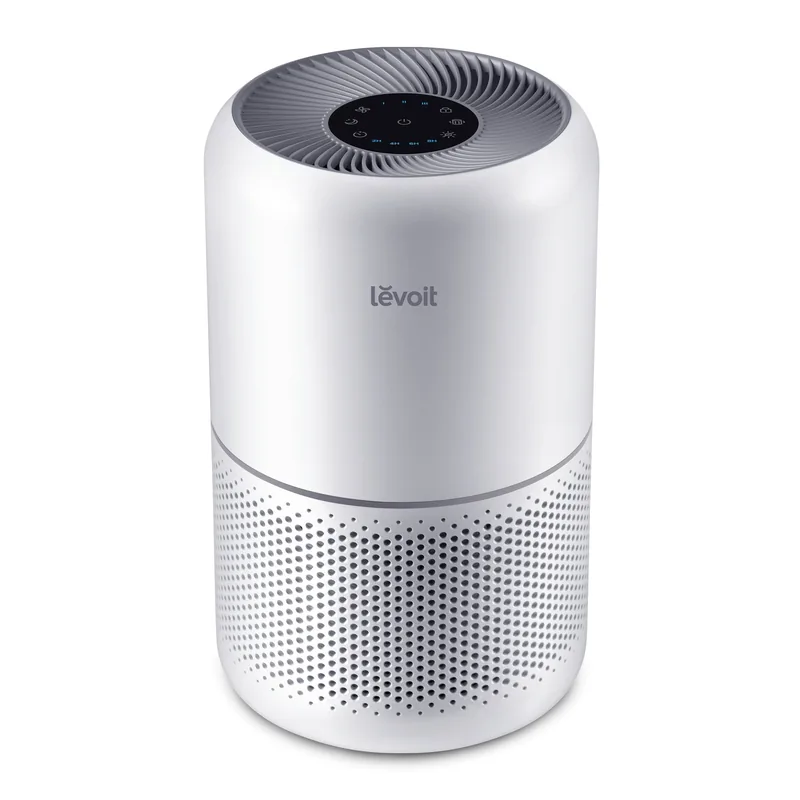
The Levoit Core 300 is sized for exactly this situation — a bedroom or home-office-sized room rather than an open floor plan — with AHAM-certified CADR ratings (a real, independently tested number, not a self-reported marketing figure) and a combined 3-in-1 filter that simplifies maintenance to one part instead of several. It's a $99 purchase with a 4.7/5 average across 108,195 Amazon ratings, and its dedicated sleep mode with display dimming makes it specifically bedroom-friendly.
If floor upkeep is the real complaint
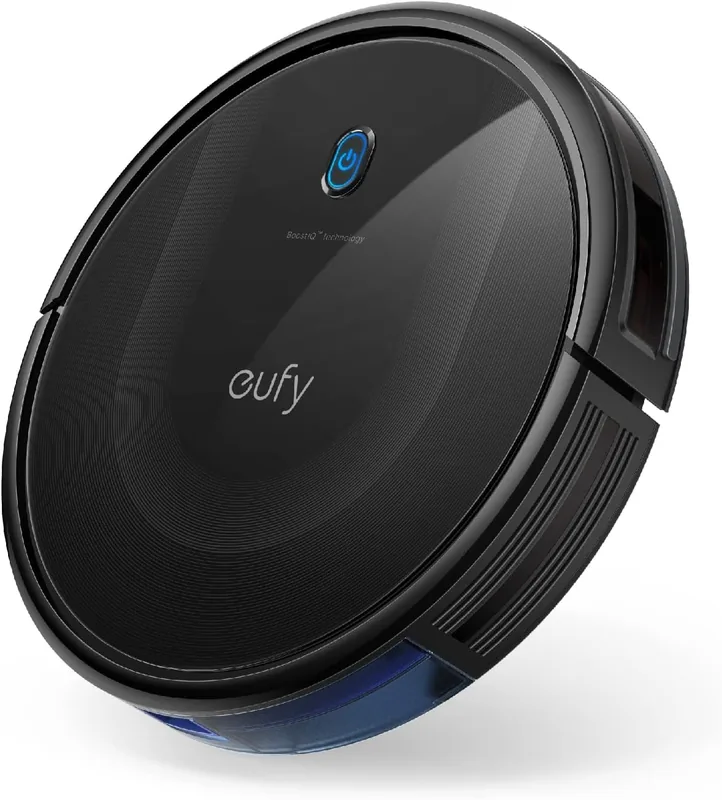
The eufy 11S MAX covers the other side: a slim 2.85-inch profile that reaches under furniture taller robots can't, BoostIQ suction that auto-adjusts within 1.5 seconds when it detects carpet, and drop-sensing plus infrared obstacle sensors at a price below eufy's WiFi-connected models — no app account required to run it. It sits at $159.99 with a 4.3/5 average across 59,168 ratings, aimed at hard floors through medium-pile carpet rather than thick plush.
A practical way to decide
- Do you notice a smell, haze, or allergy symptoms more than you notice dust on the floor? Start with the purifier.
- Is the floor visibly dirty within a day or two, especially with pets, more than the air ever bothers you? Start with the vacuum.
- Small bedroom or home office with a closed door? An air purifier does more in a small, enclosed space than a robot vacuum does — there's less floor to cover and more benefit from continuously filtered air in a room you sleep in.
- Open floor plan with pets or kids? Floor accumulation is usually the more constant, visible problem, which tips the first purchase toward the vacuum.
Why not compare them on the same spec sheet
It's tempting to line up CADR rating against suction power like they're two versions of the same purchase decision, but they're not measuring anything comparable — one is a measure of air turnover, the other is a measure of floor coverage and debris pickup. Treating them as competing options for the same budget line only makes sense if you genuinely can't afford either right now; if you can afford one, the decision is about which problem is actually present in your home, not about which product wins a shared scorecard.
The takeaway
An air purifier and a robot vacuum aren't a real trade-off against each other — they're answers to two unrelated complaints. Match the purchase to whichever problem you actually notice day to day, and treat the other one as a second purchase for later, not a competing option you're choosing against right now.