
Automatic litter box listings lead with the same three selling points every time: fewer scooping sessions, odor control, and multi-cat capacity. Those are real benefits, but the spec sheet rarely explains the parts that actually determine whether the unit works for your household — a minimum weight gate on the automatic cycle, what "supports 3 cats" actually means in practice, and how much warranty length really tells you. None of this requires hands-on testing to get right; it's about reading the listing correctly before you buy.
The weight-sensor gate most buyers miss
Automatic litter boxes use a weight sensor to trigger the self-cleaning cycle after a cat steps out — and nearly every model gates that cycle behind a minimum weight, commonly somewhere in the 3-8 lb range depending on the brand. A kitten or a small adult cat under that threshold won't reliably trigger the automatic cycle, which is exactly why most units also ship with a separate manual mode. If you have a kitten now, check whether the listing calls out a specific weight minimum and a manual-mode option — buying based on the adult weight range alone can leave you scooping by hand for months longer than expected.
Multi-cat capacity isn't multi-cat harmony
A box rated for two or three cats means the hardware can physically handle that much usage volume — it says nothing about whether your cats will actually agree to share it. Litter box guarding is a real, common behavior issue: one cat can stake out a box and discourage others from using it, regardless of how automated or spacious the unit is. If you're buying specifically to consolidate multiple cats onto one box, it's worth having a backup plan (a second box, even a basic one) ready in case sharing doesn't work out — no amount of automation resolves a territorial dispute between cats.
What "warranty" actually covers
Warranty length varies a lot across this category — some budget units offer a single year, others extend further. The length alone doesn't tell you much; what matters is whether the coverage includes parts only or parts and labor, and whether it covers the motor/sensor mechanism specifically (the most likely failure point) or just the housing. Before treating a longer warranty as a meaningful upgrade, check what it actually promises to fix.
Cleaning cycle and odor control vary more than the marketing suggests
"Automatic" and "odor-free" are not the same claim, even though listings often imply they are. How often the unit runs its cleaning cycle, how it seals or bags waste, and how well the seal actually holds odor in between full-bin removal all vary by brand and model — a self-cleaning box that only cycles once every few hours, or one with a poor waste seal, can still smell noticeably worse than expected in a small room. If odor control is your main reason for upgrading, look specifically for how the listing describes the sealing mechanism, not just the word "automatic."
What to check before buying
- The minimum weight for the automatic cycle, and whether a manual mode exists for cats under it.
- Whether "multi-cat" capacity is a hardware claim, not a guarantee your specific cats will share peacefully.
- What the warranty actually covers — parts only, or parts and labor, and whether the motor/sensor is included.
- How the listing describes the waste-sealing mechanism, not just whether it calls itself "automatic."
We cover the Neakasa M1 Plus in more detail in its own review, including its real 3.3-33 lb weight range and 2-year protection plan. For grooming tools, feeders, and carriers from the same category, see the full Pets buying guide.
The takeaway
An automatic litter box is a real convenience upgrade, but the marketing headline ("automatic," "multi-cat," "odor control") only tells part of the story. The weight-sensor gate, real sharing behavior between cats, warranty scope, and sealing mechanism are the details that actually decide whether it works for your specific household — check those before the price tag.
Featured Picks
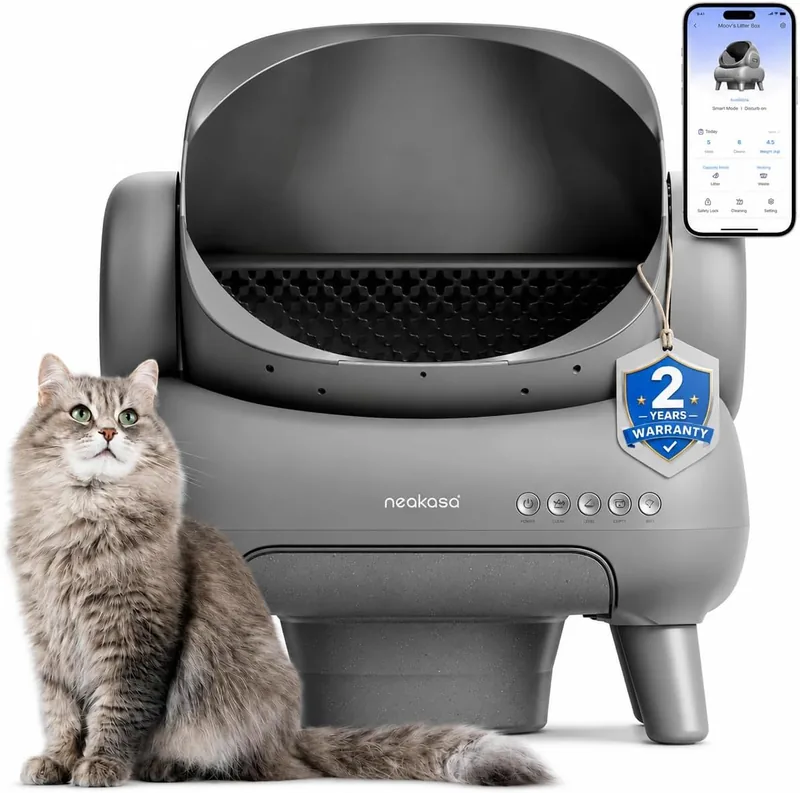
Neakasa M1 Plus Automatic Cat Litter Box
Self-cleaning litter box for cats 3.3-33 lbs and up to 3 cats, with a 2-year protection plan
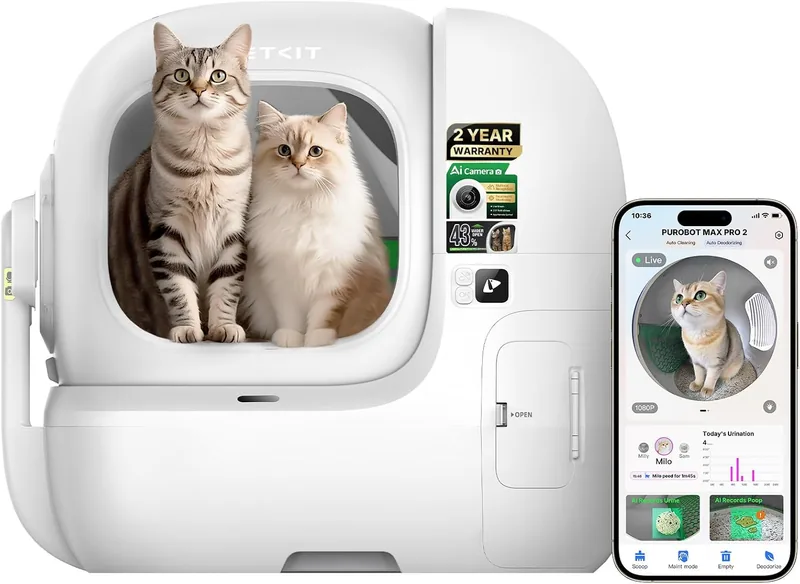
PETKIT Purobot Max Pro 2
AI-camera self-cleaning litter box with facial recognition and per-cat urine pH tracking