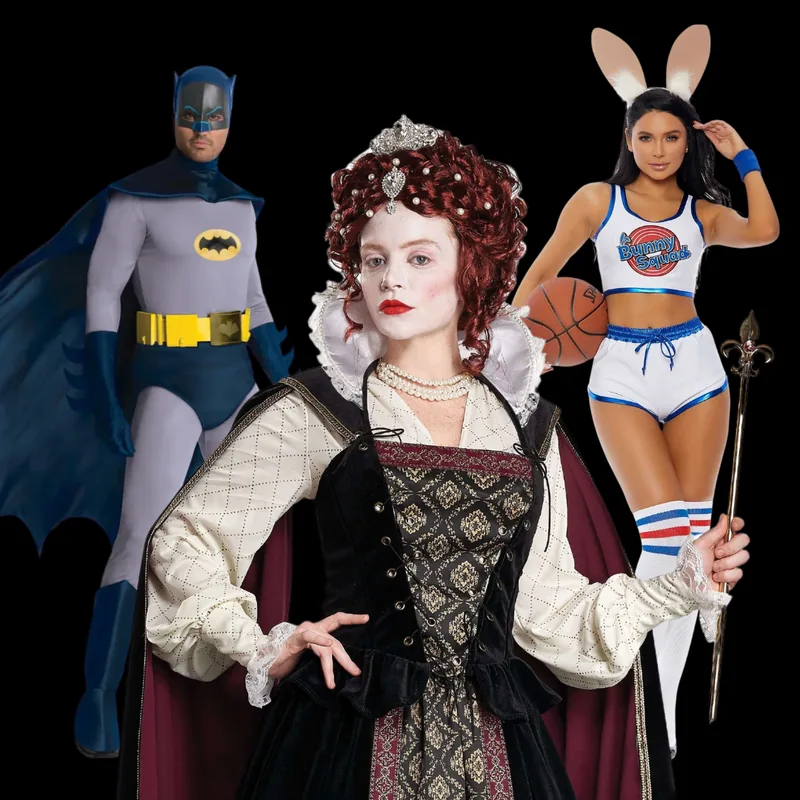
Order a "Medium" shirt from two different clothing brands and you'll usually get something close. Order a "Medium" costume from two different sellers and you can get two genuinely different garments — one that fits, and one that doesn't close in the back. Costume sizing isn't standardized the way everyday clothing roughly is, and the S/M/L label on the listing is closer to a rough starting point than a real guarantee.
Why costume sizing runs looser than regular clothing
Everyday apparel brands mostly converge on similar body-measurement ranges for a given size label, refined over decades of return data. Costume sellers — especially seasonal, fast-turnaround, or import-heavy ones — don't have the same incentive or history; a costume bought once for one event generates far less size-feedback pressure on a brand than a T-shirt someone buys repeatedly. The result is a market where "Medium" can legitimately mean different chest and waist ranges from one listing to the next.
Check the actual measurement chart, not the label
Almost every legitimate costume listing includes a measurement chart somewhere on the page — chest/bust, waist, hip, and sometimes height range, given in actual inches or centimeters. Measure yourself with a tape measure and compare your real numbers against that specific listing's chart, not against what "Medium" has meant for you in normal clothing. This single step catches most sizing mismatches before they become a return.
When you're between two sizes, size up
A costume that runs slightly loose is usually fixable on the day — a belt, safety pins, or simply accepting a looser silhouette. A costume that's too tight often isn't wearable at all, especially if it has a zipper, snap closures, or a fitted bodice. If your measurements fall between two listed sizes, the safer default is the larger one.
Fabric type changes how forgiving the fit is
Stretch fabrics (spandex, lycra blends) tolerate being slightly off from your exact measurements far better than structured or rigid pieces (armor-style costumes, corseted bodices, anything with boning or hard panels). If a listing doesn't specify stretch vs. non-stretch material, check the product description or photos for fabric composition before assuming a spandex-level margin of error.
Masks and hoods add a second sizing question
A costume that includes an attached mask or hood introduces a separate fit concern beyond body measurements: eye-hole placement and breathability. Poor visibility is the most common complaint on full-coverage costume pieces specifically — check whether the listing describes or shows the eye-hole position clearly before buying, especially if you'll be wearing it somewhere you need to move around.
Kids' costumes: check for a flame-retardant label
For children's costumes specifically, look for an explicit flame-retardant or flammability-standard label on the listing. This is a real, checkable safety specification, not marketing language, and it's worth treating as a filter criterion the same way you'd treat sizing — a costume that fits perfectly but lacks any flammability information is a worse choice than one that's slightly less perfect but clearly labeled.
What to actually check before buying
- The listing's own measurement chart, compared against your real tape-measure numbers — not the S/M/L label alone.
- Whether the fabric is stretch or structured, since that changes how much margin for error you actually have.
- Eye-hole and breathability description if the costume includes a mask or hood.
- A flame-retardant or flammability-standard label, specifically for kids' costumes.
- The seller's specific return window for the item — seasonal costume items sometimes carry tighter return terms than a site's general policy.
The costume collection at Abracadabra NYC spans cosplay, theme-party, and Halloween pieces — the measurement-chart and fabric-type checks above apply the same way across all of it. See the full Gifts & Novelty guide for wig, mask, and FX makeup buying guidance too. Before you order, read our Abracadabra NYC review — sales are final, so check sizing and shipping times first.
The takeaway
Treat the S/M/L label as a starting filter, not a guarantee — the listing's actual measurement chart is the only number that reliably predicts fit. Combined with a quick check on fabric type and, for full-coverage pieces, eye-hole placement, this catches the sizing mismatches that generic labels alone can't.