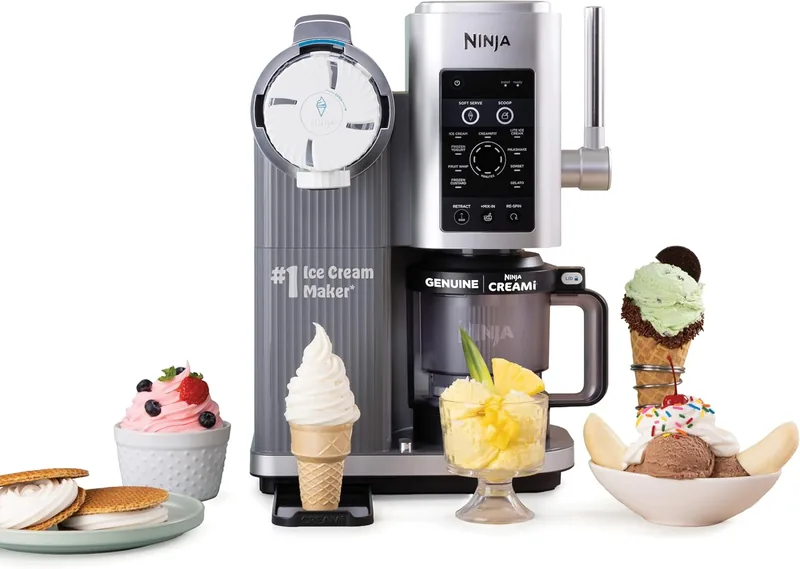
At-home ice cream maker listings tend to advertise a dozen-plus "one-touch programs" — sorbet, gelato, milkshake, frozen yogurt, and so on. The number looks impressive, but most of what changes between programs is spin speed and time, not a fundamentally different process. Here's what's actually happening mechanically, and what matters more than the program count when you're comparing machines.
Scoop vs soft serve is a real mechanical difference
Within the program list, there's one genuine split worth paying attention to: scoop-format machines process a pre-frozen base into a dense, parlor-style texture, while soft-serve machines dispense a lighter, aerated texture through a nozzle in real time. A machine that does both needs a separate soft-serve mechanism (a dispenser handle, in most designs) on top of the scoop hardware — that's a real added part, not just a software toggle, which is usually why dual-format machines cost more than scoop-only ones.
The rest of the "13 programs" are mostly time and speed presets
Sorbet, gelato, frozen yogurt, and the various "lite" or dietary variants are largely the same base mechanism run at different spin durations and speeds tuned for each mixture's fat and sugar content — not a separate piece of hardware for each one. That's not a knock on the feature; it's genuinely useful to have those presets dialed in rather than guessing your own timing. Just don't expect "13 programs" to mean 13 different mechanisms.
The base still needs to freeze first
Almost every home ice cream maker — regardless of brand or program count — requires the base mixture to be pre-frozen (either in a freezer bowl overnight, or as a separate frozen base you make ahead) before the machine spins it into finished texture. "One-touch" describes the spin step, not the whole process start to finish. If you're expecting a mix-to-finished-treat-in-minutes experience with zero prep, that's the expectation to recalibrate before buying any model.
What actually differs between models worth comparing
- Format — scoop only, soft serve only, or both (the biggest price/complexity driver)
- Base method — pre-frozen bowl/pint you make ahead, vs. a built-in compressor that freezes on the spot (compressor models cost more but skip the pre-freeze wait)
- Ingredient control — whether the machine works from your own base (full control over sugar/dairy) or requires a proprietary mix
- Cleanup — how many parts are dishwasher-safe vs. hand-wash only
The takeaway
Program count is the easiest spec to market and the least useful one to compare on. The real decision points are format (scoop, soft serve, or both), how the base gets frozen, and how much control you get over what goes into it. If you're comparing a specific dual-format model, we looked at the specs of one option in our Ninja Creami Scoop & Swirl review.
The same "count inflation" pattern shows up on other kitchen gadgets sold on hardware-count marketing: our RüK 22-in-1 vegetable chopper review covers a listing that turns 11 physical blade inserts into a headline "22 cutting styles" number — real hardware behind it, but the same instinct to market the combinatorial count rather than the actual number of parts that a "13 programs" ice cream maker listing leans on.