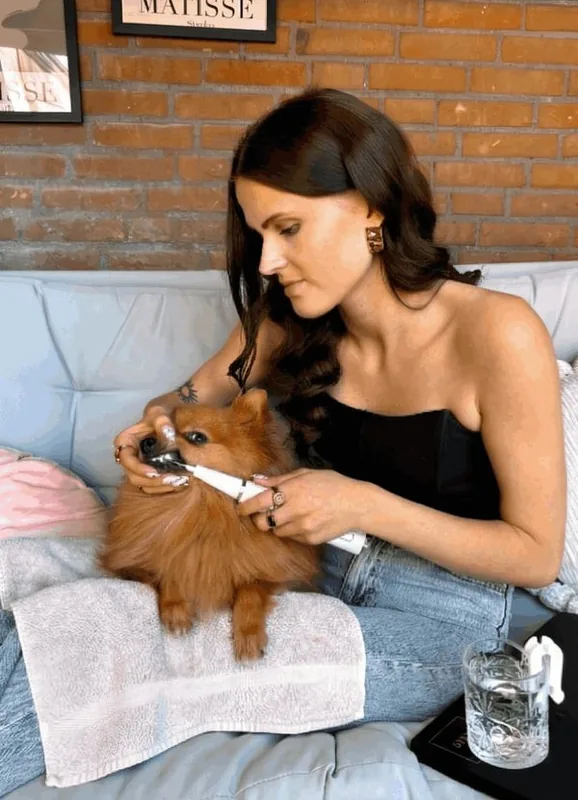
At-home dental kits for dogs — scalers, finger brushes, dental sprays, dental chews — are marketed as an easy alternative to professional cleanings, and it's an understandable read given the price gap. But "helps with dental care" and "replaces professional cleaning" are two very different claims, and conflating them is the single most common mistake dog owners make with these products. Here's the actual limit, and what at-home tools are genuinely good for.
What at-home tools actually do
Scalers, dental sprays, and enzymatic chews can reduce plaque buildup on the visible surface of the tooth between cleanings. Regular use — daily brushing is the gold standard, but even a few times a week helps — genuinely slows how fast tartar accumulates and can reduce how often a dog needs a full professional cleaning. This is real, meaningful maintenance, not a placebo.
The gumline problem
What at-home tools can't do is reach below the gumline, where periodontal disease actually starts and does the most damage. A professional dental cleaning is performed under anesthesia specifically because it requires probing and scaling below the gumline — something no awake dog will tolerate, and no at-home tool is designed to do safely even if they would. If a vet has flagged periodontal disease or significant tartar buildup, an at-home routine on its own won't resolve it; it needs the professional cleaning first, with at-home care as the maintenance that follows.
Treat it as maintenance, not a replacement
The useful way to think about at-home dental care is as an interval-extender: it doesn't eliminate the need for professional cleanings, but consistent use can meaningfully space them further apart, which matters given that professional cleanings require anesthesia and aren't cheap. Ask your vet what cleaning interval makes sense for your dog's breed, age, and current dental condition — some breeds (particularly small and toy breeds) are more prone to dental disease regardless of home care, and the right interval varies a lot by dog.
What to check before buying an at-home kit
- Whether your dog currently has flagged periodontal disease — if so, talk to your vet before assuming an at-home kit is enough on its own.
- How often you'll realistically use it — a scaler used once a month does very little; the benefit comes from consistency.
- Whether dental chews are VOHC-accepted (Veterinary Oral Health Council) if you want some independent verification beyond marketing copy.
- Your dog's breed/age-appropriate cleaning interval, which is a question for your vet, not a listing page.
See Canivet's at-home dental care collection — scalers, mouth openers, and dental sprays — for the maintenance side of this routine, or the full Pets buying guide for grooming, feeding, and carrier picks.
The takeaway
At-home dog dental care is genuinely useful as ongoing maintenance, not as a substitute for professional cleaning when it's actually needed. The gumline is the dividing line — anything below it needs a vet, anything above it is fair game for a consistent at-home routine.